Goodnotes: AI Notes, Docs, PDF
- 3.4
- Rating
- 5.00M
- Installs
- Free
- Price
 Analysis by App-foxy
I came away from Goodnotes thinking of it less as a simple note pad and more as a digital desk for handwriting, documents, study material, and PDFs. I used it with the mindset of someone deciding whether to move everyday notes onto a phone or tablet, and that distinction matters. If you enjoy writing by hand but want your pages searchable, movable, and easier to keep together, it has a clear appeal. If you mainly type quick reminders or want a completely frictionless free app, the decision is less obvious.
Goodnotes is a free productivity app from Goodnotes, available for users aged Everyone, with support beginning at OS 9. It has passed 5M+ installs, while its average rating sits at 3.4 from 34K ratings and 743 reviews. Those figures suggest a product with a substantial audience but also a noticeably mixed experience. My own view is that the app makes the most sense when handwriting and document work are central to your routine, rather than as a replacement for every kind of notes app.
What I would judge before moving my notes into Goodnotes
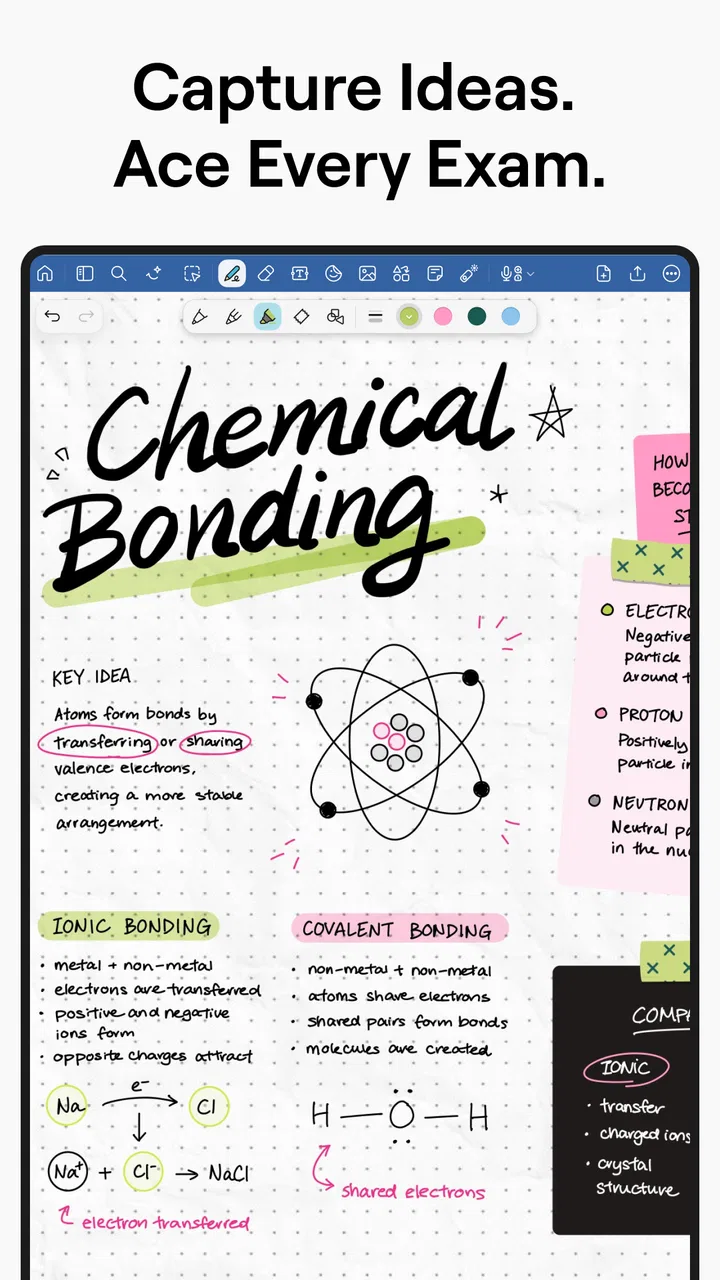
The first question is not whether the interface looks pleasant. It is whether your notes have a visual structure that typing alone does not capture. Lecture diagrams, annotated reading, planning pages, handwritten meeting notes, and marked-up worksheets all benefit from a page-based workspace. Goodnotes gives those activities a more natural home than a basic text editor.
You May Also Like

 Pandora - Music & Podcasts
Pandora’s Music Is Easy to Start, but Harder to Recover
Pandora’s strength is its low-effort path from a seed to a station. Its weak spot is how much confidence it asks you to place in connection, setup, and quiet recovery.

 AccuWeather: Weather Radar
AccuWeather Review: A Quick, Clear Forecast for Everyday Decisions
For everyday plans, the best forecast is the one you can understand quickly. AccuWeather makes rain timing, radar, and local conditions easy to act on, with a few trade-offs.

 Hill Climb Racing
Why Hill Climb Racing Still Turns Crashes Into One More Run
A tiny car, a bumpy hill and one more upgrade: Hill Climb Racing keeps resurfacing because its simple chaos makes every near-miss feel personal.

 AliExpress - Shopping App
AliExpress Makes Global Shopping Feel Personal, but Shoppers Bear the Risk
AliExpress turns a global marketplace into a pocket-sized discovery engine. Its reach is useful, its shopping loop compelling, and its trade-offs easy to miss.

 Lords Mobile: Kingdom Wars
Lords Mobile Is a Kingdom-Building Routine, Not a Quick Match
A case-by-case verdict on the building, battles, device demands, and social commitments that make Lords Mobile rewarding for some players and exhausting for others.

 PDF Scanner app - TapScanner
TapScanner Makes Paperwork Easier to Capture, Check, and Share
TapScanner makes scanning with a phone feel less like a rescue operation and more like a dependable step in getting work done. Its capture tools are useful, though not flawless.
More From Our News Desk
View All News


I would also consider the device you use most. Handwriting is much more comfortable with a stylus and a reasonably sized screen. On a phone, the app remains useful for reading documents, checking pages, or adding a short mark, but long handwritten sessions can feel cramped. That is an important buying decision: the software may be free to start, yet the best experience depends heavily on the hardware already in your hands.
My second criterion is organization. A notebook metaphor sounds simple, but it changes how you work. Instead of collecting disconnected text entries, you can think in terms of subjects, projects, reference files, and ongoing notebooks. That is especially helpful when a course or project produces several kinds of material: handwritten explanations, imported documents, sketches, and review pages.
The third criterion is how much you need documents to remain useful after the meeting or class ends. A PDF that has been marked up in context is usually more valuable than a separate note saying “check page twelve.” Goodnotes is built around that relationship between the original file and your own handwriting. For me, this is one of its strongest reasons to exist.
Finally, I would ask how much assistance you actually want from AI. The app presents AI help as part of its experience, but I would not choose it solely because of that label. The core value is still the notebook and document workflow. AI can be useful when it saves time inside that workflow, but it should not be the deciding factor for someone who does not already want a handwriting-focused workspace.
The notebook workflow feels closer to paper than a text notes app
When I open a notebook, I naturally start thinking about pages rather than isolated entries. That sounds like a small difference, but it affects how I capture information. I can leave space for a diagram, write a heading in my own style, add an arrow, and continue below it without having to force everything into a rigid outline.
This is particularly effective for study notes. I can keep a definition, an example, and a rough drawing together on one page. Later, I can return to that page as a single visual memory instead of searching through several separate text blocks. The method is not automatically better for everyone, but it suits people who remember relationships and layouts as much as words.
There is also a useful psychological advantage: a digital page feels less permanent than a paper notebook. I am more willing to rearrange an explanation, add a correction, or create a fresh version without worrying about wasting a page. That makes experimentation easier, especially when I am working through a difficult topic rather than producing polished notes on the first attempt.
PDF markup is the feature that gives the app a practical edge
Many note-taking tools can store a PDF, but the real test is whether marking it up feels like part of the same activity as reading it. In Goodnotes, I can approach a document as something to work on rather than something merely to view. Highlighting, writing in the margins, and adding visual cues make the file more useful during revision or review.
A realistic example is a student preparing for an exam. I would import the course handout, mark the sections that need attention, write questions beside confusing paragraphs, and use a separate page to work through an answer. The important detail is that the source material and my reaction to it stay connected. I do not have to rebuild the context later in a separate app.
The same workflow suits a person reviewing a long document for work. Instead of copying every issue into a message while reading, I can annotate the relevant page first, then use those notes to guide a later summary. This reduces the risk of losing the location of a comment. It also makes a second pass faster because the visual marks show where my attention already went.
My practical tip is to avoid marking every sentence. A PDF covered in identical highlights quickly becomes difficult to scan. I get more value by reserving handwriting for decisions, questions, corrections, and connections. That turns the markup into a navigation layer rather than a colorful duplicate of the original document.
AI help is most useful when it stays inside a real note-taking task
The AI element is easier to appreciate when I treat it as an assistant for material I am already handling, not as a reason to generate pages without thinking. For example, after writing a rough set of study notes, I would use assistance to help identify the main ideas or expose gaps in my understanding. The benefit is not replacing my notes; it is giving me another way to inspect them.
I would still review every result carefully. Handwritten notes can be abbreviated, messy, or dependent on a diagram, and any automated interpretation deserves checking. For sensitive work, I would also be deliberate about what I place into an AI-supported workflow. The convenience is real, but convenience should not remove judgment.
A less obvious use is turning revision into a conversation with your own material. I can write a page from memory, compare it with the source document, and then use assistance to organize the points that need another look. That is more valuable than asking for a generic summary because it starts from my actual misunderstandings.
Sync and organization matter more after the first week
At the beginning, almost any note app feels organized because there are only a few notebooks. The real test arrives when the library grows. I found that Goodnotes works best when I decide early what deserves its own notebook and what belongs in a temporary page. A notebook for every tiny subject creates clutter, while one giant notebook makes retrieval harder.
I prefer a structure based on ongoing areas: one notebook for a course, one for a continuing project, and separate spaces for reference material that I revisit often. Within a notebook, consistent page titles and a repeatable layout make a larger difference than decorative covers or elaborate formatting. The app gives me the canvas, but I still have to create the filing habits.
Sync is valuable because notes are not always created and consumed on the same device. I might write on a larger screen, then check a marked page on my phone before a meeting. That flexibility reduces the need to carry paper, but it also means I should allow time for the first organization pass. A messy digital library can become just as frustrating as a drawer full of loose notebooks.
Where this app wins against ordinary note tools
Goodnotes has a strong case when the alternative is a basic text notes app. Text tools are excellent for quick lists, short reminders, and content that needs to be copied into messages. I would still use one for a grocery list or a temporary thought. But the moment I need handwriting, spatial layout, or direct document annotation, a plain text editor starts asking me to describe what I could have shown visually.
It also compares well with paper in a different way. Paper has wonderful immediacy and no battery requirement, but it is harder to carry in quantity, revise cleanly, or keep beside related files. Goodnotes lets me maintain the familiar freedom of a page while adding digital organization. That trade is compelling for students and professionals who already carry several documents at once.
Compared with a typed, database-style workspace, the choice depends on how structured your information needs to be. A database-oriented tool may be better for tables, linked records, project status, and highly repeatable text templates. Goodnotes is better when the page itself is the unit of thought. I would not force one approach onto the other: they solve different problems.
Where another category of app may fit better
I would skip Goodnotes if nearly all my notes are short typed entries and I need instant capture above everything else. A lightweight text app will usually involve fewer steps. Opening a notebook, choosing a page, or deciding where a document belongs can feel like unnecessary overhead when the task is simply recording a sentence.
I would also look elsewhere if collaboration is the center of my work. Goodnotes can be useful for preparing and reviewing material, but a team that needs several people editing structured text at the same time may prefer a shared document or project workspace designed around simultaneous contributions. The right choice depends on whether I am primarily thinking on a page or coordinating with other people.
Creative sketching is another nuanced case. Goodnotes is comfortable for diagrams, annotations, and visual thinking attached to notes. I would not automatically treat it as a full art studio, though. Someone choosing an app specifically for advanced illustration tools, detailed brush control, or a professional drawing pipeline may be happier in a dedicated creative application.
There is also a trade-off for people who want the simplest possible free experience. Goodnotes is free to download, but in-app purchases range from $0.49 to $99.99 per item. That does not make it poor value, yet it means I would inspect which parts of my intended workflow remain available without paying before I invest time in moving a large archive.
The real cost of switching is rebuilding habits, not creating an account
Moving from paper is easy at first: create a notebook and start writing. The harder part is deciding what to do with old material. I would not scan every page immediately. I would begin with the documents I actively revisit, such as current course material, recurring meeting references, or a project that is still in progress. This keeps the transition useful instead of turning it into a large archiving project.
Moving from another digital app requires a different approach. I would keep the old system available while testing one complete workflow in Goodnotes: capture, organize, revisit, and retrieve. If I can find a marked page quickly after several days, that tells me more than a first impression of the interface. It also reveals whether the notebook structure matches how I actually think.
My strongest switching tip is to define a stopping rule. For example, I might decide that new study material goes into Goodnotes while older notes remain where they are unless I need them. This avoids spending a weekend recreating an archive that I may rarely open. Digital organization should reduce friction, not become another project competing for attention.
There is a second cost: changing from typing to handwriting can slow capture. I would not use handwritten pages for every fleeting idea. I would use a quick text tool for temporary reminders, then reserve Goodnotes for information that benefits from a page, a document, a diagram, or later review. That hybrid approach is more realistic than insisting one app handle every thought.
A practical daily routine I would recommend
Imagine I am attending a class or a planning session. Before it begins, I open the relevant notebook or document and create a clear starting point. During the session, I write only the important ideas, questions, and decisions rather than trying to transcribe every word. I leave visual space between topics so that later additions do not turn the page into a wall of ink.
Afterward, I spend a short review period adding missing context while the discussion is still fresh. I mark questions that need answers, connect related pages, and use AI help only where it can organize or challenge my understanding. The key is that review happens in the same workspace as capture. That makes the notebook a working record rather than a storage box.
For PDF-heavy work, I would keep the original document intact and use annotations as a layer of decisions and questions. I would avoid turning every highlight into a permanent commitment. When a document changes, I would create a clear new working copy rather than mixing comments from different versions. This small discipline prevents confusion later.
For personal planning, I would use a page for the visual overview and a separate typed tool for reminders that must trigger at a particular time. Goodnotes can help me think through a week or sketch a plan, but a page is not automatically a notification system. Knowing that boundary keeps the app useful instead of making it responsible for jobs it was not chosen to perform.
Who should install it, and who should wait?
I would recommend trying Goodnotes if you are a student, reader, researcher, designer, teacher, or professional who regularly marks up documents. It is also a good fit for anyone who thinks more clearly with a pen than with a keyboard. The free entry point makes experimenting reasonable, especially if you already have a compatible device and do not need to migrate everything immediately.
I would be more cautious if you want a universal task manager, a minimalist scratchpad, or a team editing hub. In those situations, the page-based approach can be more elaborate than necessary. I would also hesitate if you dislike maintaining notebook structures, because the app becomes less enjoyable when every page is filed inconsistently and retrieval depends on memory.
The rating of 3.4 is worth keeping in mind as a signal to test the app against your own routine rather than assuming it will suit everyone. My experience suggests that the strongest results come from a focused use case: study notes, PDF review, handwritten planning, or a project notebook. The more clearly I define that role, the less likely I am to judge it unfairly as a replacement for every productivity tool.
Goodnotes is free, and its Everyone age rating makes it broadly approachable, but the in-app purchase range means I would explore the free workflow before committing to a paid expansion. I would start with one notebook, one document workflow, and one week of real use. That is enough to answer the questions that matter: do I return to handwritten pages, can I find material quickly, and does document markup save me time?
My final recommendation is straightforward: choose Goodnotes when your productivity improves by thinking on pages. It combines handwriting, PDF work, organization, syncing, and AI assistance in a way that feels coherent for study and document-centered routines. I would not choose it as my only notes app if I mostly type quick reminders or need highly structured team collaboration. For the right user, though, it can replace a stack of paper notebooks and scattered marked-up files with a more manageable digital workspace.
I would begin modestly, keep the library organized from the first notebook, and treat AI as a review aid rather than an authority. Used that way, Goodnotes earns its place through the daily details: finding a page before a meeting, keeping a diagram beside its explanation, and returning to a marked PDF without losing the thought that led to the annotation. That is where Goodnotes feels genuinely useful, and it is also the clearest reason to try it.
FAQs for Goodnotes: AI Notes, Docs, PDF
01What is Goodnotes: AI Notes, Docs, PDF used for?
Goodnotes is a digital note-taking and document management app for iPhone, iPad, Mac, and other supported platforms. It lets you create handwritten or typed notes, organize notebooks and folders, annotate PDFs, scan paper documents, and work with imported files. It is especially useful for students, professionals, and anyone who prefers keeping notes, planners, presentations, and study materials in one searchable digital workspace.
02Does Goodnotes support handwriting and Apple Pencil?
Yes. Goodnotes is designed around handwritten note-taking and works particularly well with Apple Pencil on compatible iPad models. During testing, writing feels natural, while tools such as pen styles, highlighters, erasers, lasso selection, shapes, and palm rejection make editing comfortable. You can also type text, add images, stickers, audio recordings, and other elements, although the available features may vary by device and subscription plan.
03Can Goodnotes import, edit, and annotate PDF files?
Goodnotes supports importing PDF documents so you can read, highlight, draw, write comments, and add typed text directly on the pages. This makes it practical for reviewing textbooks, signing forms, marking up work documents, or completing digital worksheets. It is primarily an annotation and organization tool rather than a full PDF editor, so advanced functions such as complex form editing may be limited compared with dedicated PDF software.
04Does Goodnotes include AI features, and are they useful?
Goodnotes includes AI-related tools designed to assist with note-taking, searching, and productivity, depending on the current version and plan. These features may help recognize handwriting, find information across notes, summarize content, or improve written work. Results can vary based on handwriting clarity, document quality, language, and internet availability. Users should also review privacy settings before sending sensitive notes to any cloud-based AI service.
05Is Goodnotes free, and what are the main limitations?
Goodnotes can generally be downloaded and used with a free option, but the free experience may include limits on the number of notebooks, available tools, storage, or advanced AI and synchronization features. A paid plan may be required for heavier use, expanded templates, cross-platform access, or premium functions. Pricing and included features can change, so check the subscription details shown in the App Store or Google Play before downloading.
Pros
- Excellent handwriting tools with smooth
- responsive Apple Pencil support.
- Powerful PDF annotation features
- including highlighting
- shapes
- and bookmarks.
- Customizable templates help organize notes for school
- work
- or personal projects.
- Audio recording can be synced with handwritten notes for easier review.
- Cross-device syncing keeps notebooks accessible across supported Apple devices.
Cons
- Many advanced features require a subscription or separate in-app purchase.
- The large feature set may feel overwhelming for first-time note-taking app users.
- Android and Windows versions may offer fewer features than the iPad app.
- Large notebooks with media can consume considerable device storage.
- Exported files may need formatting checks when shared outside Goodnotes.

Goodnotes: AI Notes, Docs, PDF
Gallery